➕ The Conditions 220
Are you coal, or a horse? Why Liberal Arts Is More Valuable Than Ever, The Urge to Destroy Technology...

AI & Machine Learning
Why A Liberal Arts Education Will Soon Be More Valuable Than Ever [Via Noema]
In a workplace augmented by AI, the new frontier of human value lies in interpretation, negotiation and trust-building.
For decades, the prevailing career advice was simple and utilitarian: Abandon the squishy subjects of the arts and humanities and embrace STEM. We were told that to stay relevant in a digital economy, we must “learn how to code.” In the judgment economy, that advice is all but obsolete.
The most valuable skill is no longer the ability to generate a technical output, but rather the capacity to evaluate a hundred AI-generated options and identify the connections that matter most. This is the capacity for seeing connections and resonances between disparate knowledge domains: understanding how a historical precedent might inform a modern marketing strategy, or how an ethical framework might guide a product rollout.
This is the interdisciplinary thinking that liberal arts colleges have long championed, often to the derision of tech executives like the demon-obsessed Peter Thiel, who considers college at best a site for training in banausic skills like software engineering that are anyways better learned on the job.
One of the great ironies of this new machine age is that it seems set to rehabilitate, quite precisely, the value of the traditional “liberal arts” education. I don’t mean merely the humanities, but rather the broadest possible exposure to the natural sciences and the arts, the social sciences and the humanities. In a world dominated by AI, deep educational specialization is a risk; if your value is tied to a single technical niche, you are vulnerable to being eclipsed by the next software update. By contrast, absorbing knowledge from a variety of fields creates a cognitive flexibility that is the best bet for maintaining long-term viability.
How to Guess If Your Job Will Exist in Five Years [Via The Atlantic']
Ask yourself: Are you coal, or are you a horse?
In 2016, the Nobel laureate Geoffrey Hinton argued that we “should stop training radiologists” because software would soon render them obsolete. But improvements in medical imaging unlocked new use cases for CTs and MRIs; patients demanded, and doctors ordered, more tests, and radiologists were the doctors administering and interpreting them. Technology acted as a complement to human work rather than a substitute for it. Ditto with radiology and AI. At least for now, artificial intelligence is changing how doctors do their job, not eating their lunch.
How Pokémon Go is giving delivery robots an inch-perfect view of the world
Niantic’s AI spinout is training a new world model using 30 billion images of urban landmarks crowdsourced from players.

Product Design & UX
Craft is Untouchable
AI doesn’t threaten craft—the temptation to skip iteration does.
My chosen design processes might take me more time at certain points than the designer “designing with Claude Code,” but it’s my time to spend. I think I’ve made the right choices, but only I am in a position to judge them. What happens when these choices are made for me? What happens when they’re made from a distance, where the outcome is obscured?
Craft is always threatened in the midst of technological change, not by the technology itself, but by the addictions we develop to what the technology makes possible: Simpler choices, lower costs, faster outcomes. Each is desirable and defensible in isolation, but as a foundation, the fastest path to a fragile future.
The Age-Old Urge to Destroy Technology [via The New Yorker]
The book “Techno-Negative” reminds us that resistance to new inventions has existed in some form across millennia.
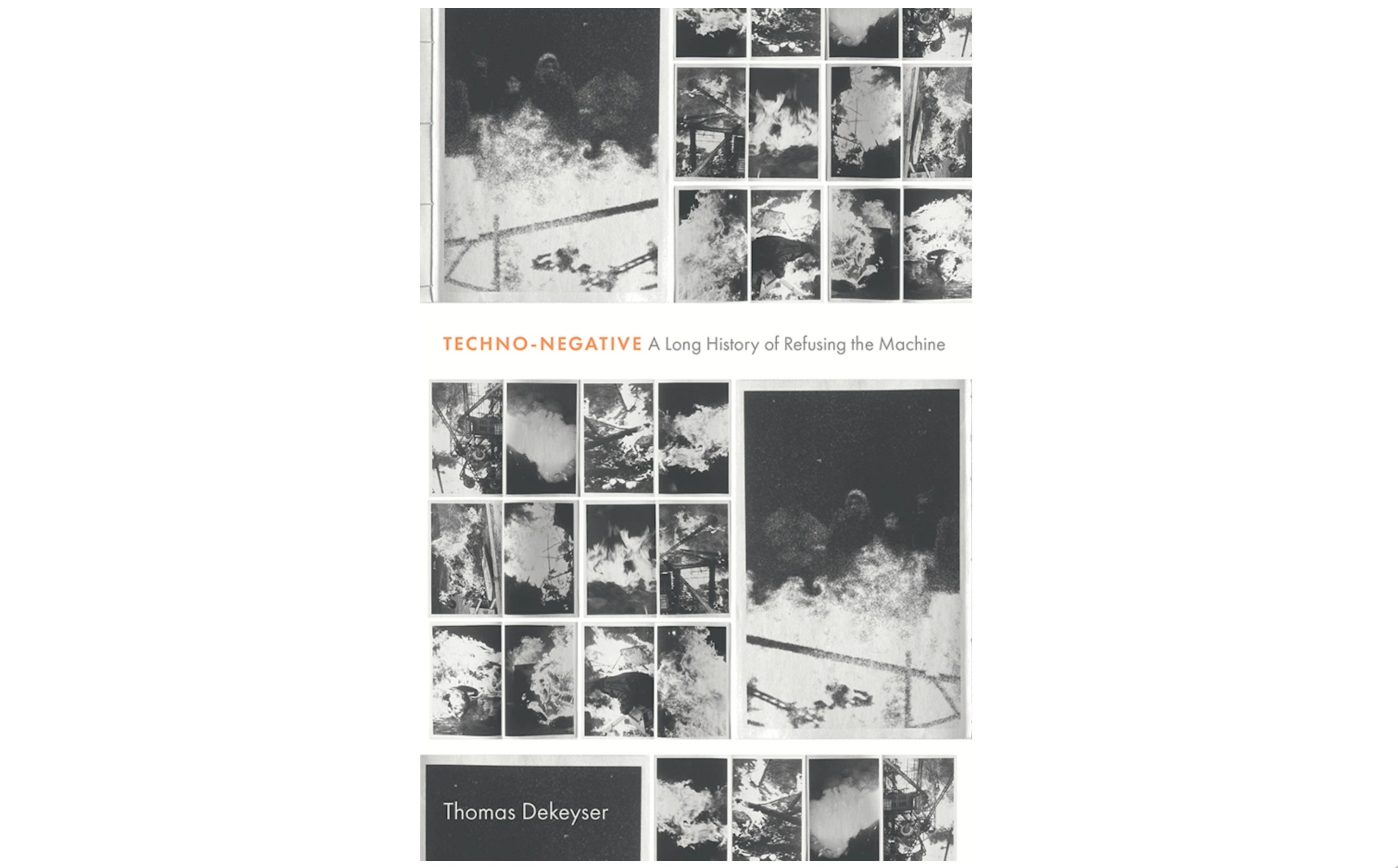
Still, there’s more solace to be found in the history traced by “Techno-Negative” than in many more mainstream literary critiques of technology. Our hatred of social media or of artificial intelligence is not some novel phenomenon, Dekeyser reminds us; it’s a feeling that has existed in some form across millennia. Resistance seems less futile when it is part of a shared tradition, though “Techno-Negative” is more focussed on tracing a lineage than on judging the efficacy of anti-technology movements past. Many of the stories in the book are tragic Icarus narratives, featuring acts of rebellion that succeed in one brief ecstatic burst, and then resoundingly fail. We know from history that the Luddites were not successful; indeed, over time their name became (undeservedly!) a shorthand for technological dummies.
Design
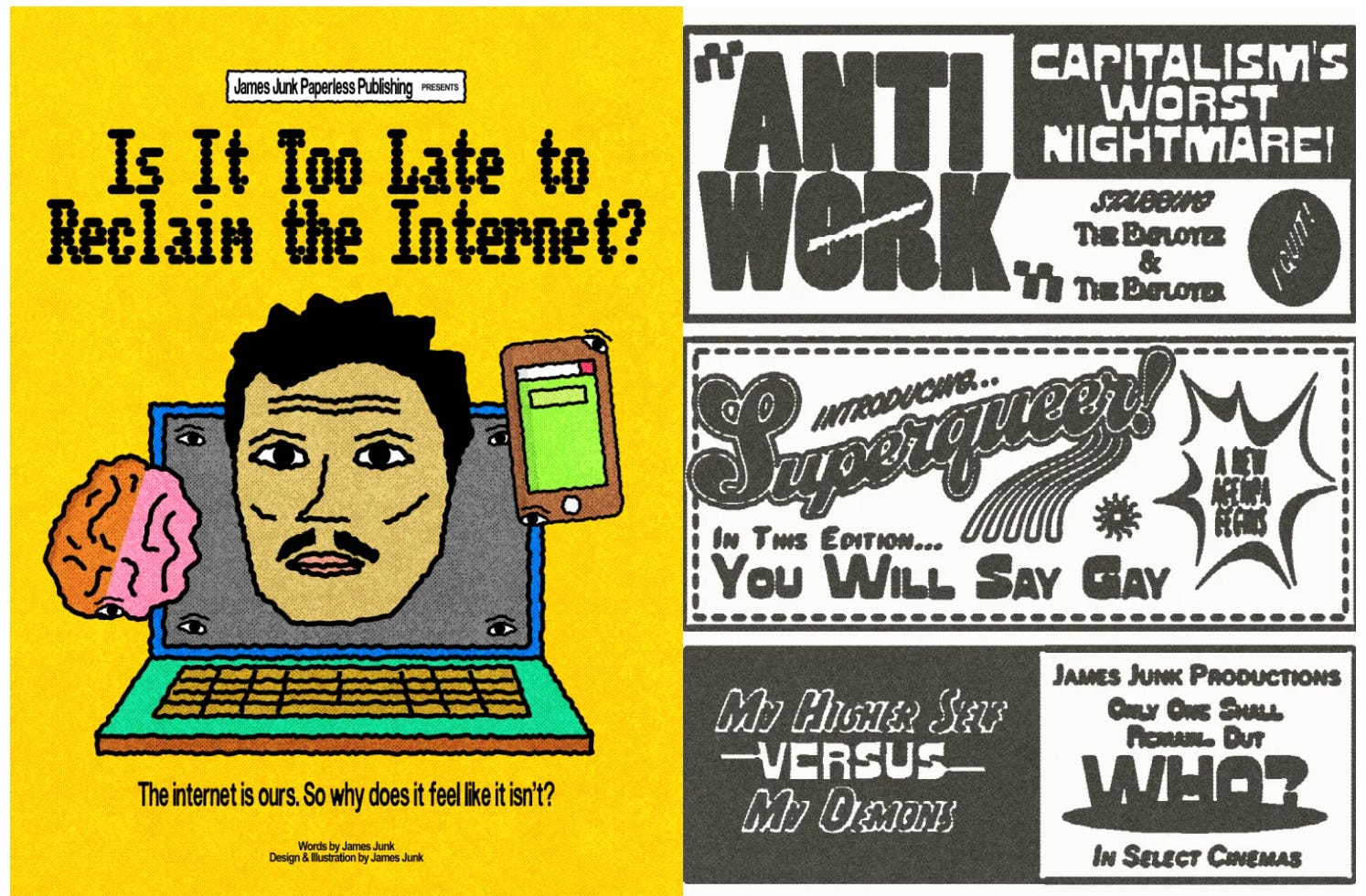
James Junk is the Voice Design Needs Now [via Print Magazine]
The joy and power of Risograph: Risotto showcases 400 printed postcards from artists across the globe
Print and design studio Risotto is marking 100 months of artist postcards, all printed by hand and posted worldwide, with an exhibition that puts the beauty and breadth of Risograph on show.

Illustration
Rob en Robin
Rob en Robin is a Dutch illustration duo based in Breda, known for transforming everyday subjects into playful, characterful visuals. Their work sits at the intersection of graphic design and illustration, often injecting humour into otherwise “lifeless” topics from data visualisation to editorial commissions. Regular clients include major publications such as The New York Times and The Economist, reflecting their global reach and distinctive voice.
Photography
NASA’s Artemis II multimedia gallery
Lunar flyby images and more